Scan, Copy and eDiscovery Services for Texas Legal Teams
Managing electronically stored information (ESI) during litigation creates pressure. Legal teams face tight deadlines while handling massive volumes of data. Discovery requests multiply. File formats vary. Review timelines compress.
Complete Legal delivers eDiscovery support that keeps your litigation workflow organized and on schedule. We work with law firms, paralegals, and litigation support teams across Dallas–Fort Worth and throughout Texas. Our focus stays straightforward: clear communication, reliable execution, and deliverables that are easy to use when time runs short.
From the first request to final delivery, we make the process smoother, faster, and easier to manage. Whether you need document scanning, OCR conversion, or comprehensive Electronically Stored Information (ESI) support, our team coordinates every step to reduce manual effort and prevent last-minute surprises.
Understanding eDiscovery in Modern Litigation

eDiscovery transforms how legal teams manage case materials. The process involves identifying, collecting, and producing electronically stored information for legal cases. This information lives across email systems, document repositories, collaboration platforms, and data sources throughout an organization.
Legal teams must search content across these scattered data sources efficiently. They need to preserve content when litigation holds take effect. They must review documents for relevance and privilege. Then they produce materials that opposing counsel can access and understand.
Traditional Discovery Challenges
- Manual document review consumes excessive time
- Paper-based processes create bottlenecks
- Version control issues compromise accuracy
- Physical storage limitations restrict access
- Geographic barriers delay team collaboration
Modern eDiscovery Advantages
- Rapid search across millions of items
- Centralized digital repositories improve organization
- Automated processing reduces human error
- Cloud access enables remote collaboration
- Advanced filtering accelerates document review
The shift to electronic formats creates both opportunities and complications. Legal teams gain powerful search capabilities. They can filter documents by date, sender, keyword, or content type. Review sets organize materials logically. Conversation threading connects related messages automatically.
However, technical complexity increases. File formats multiply. Metadata becomes critical. Privilege logs require precision. Chain of custody demands documentation. Teams need reliable partners who understand both legal requirements and technical execution.
The e-Discovery Process from Start to Finish

eDiscovery follows a structured workflow. Each phase builds on the previous step. Understanding this process helps legal teams plan resources and manage deadlines effectively.
Identification and Preservation
The process starts when litigation becomes reasonably anticipated. Legal teams must identify which data sources contain potentially relevant content. They issue legal holds to preserve content in its current state. This prevents deletion or modification of materials that may become evidence.
Collection and Processing
After preservation, teams collect relevant documents. Content search functions scan across preserved locations. Search queries combine keywords, date ranges, and sender information to narrow results. The goal is capturing relevant content while minimizing unnecessary data collection.
Processing prepares collected materials for review. Systems extract text from various file formats. They identify duplicates to eliminate redundant review work. Metadata extraction captures crucial information about document creation, modification, and distribution.
Need eDiscovery Support for Your Case?
Complete Legal handles document processing and ESI preparation so your team can focus on case strategy. We deliver organized, review-ready materials on schedule.
Review and Analysis
Document review consumes the most time and resources in eDiscovery. Legal teams examine documents for relevance to the case. They identify privileged materials that should not be produced. They tag documents by issue, custodian, or category.
Review sets organize documents logically. Users can filter by metadata, search within documents, and track review progress. Conversation threading groups related email chains together. This reduces the time needed to understand context.
Advanced analytics help prioritize review efforts. Similar document grouping identifies patterns. Email threading connects conversations. Concept clustering reveals themes across large document sets.

Production and Delivery
Production creates the final deliverable set. Documents are organized according to production specifications. Bates numbering assigns unique identifiers to each page. Load files provide metadata that receiving parties need to import documents into their review systems.
Third-party review platforms require specific formats. Native file production delivers documents in their original format. Image production converts documents to TIFF or PDF format with accompanying metadata. The production method depends on case requirements and opposing counsel agreements.
Managing Electronically Stored Information (ESI)

Electronically stored information encompasses all digital data that may be relevant to legal cases. Understanding ESI types and challenges helps teams prepare effective discovery strategies.
Structured Data

Organized information in databases and spreadsheets. Includes customer records, financial data, and inventory systems. Search requires understanding field structures and relationships.
Unstructured Data

Free-form content without predefined organization. Emails, documents, presentations, and text files. Requires full-text search and content analysis to identify relevant materials.
Semi-Structured Data
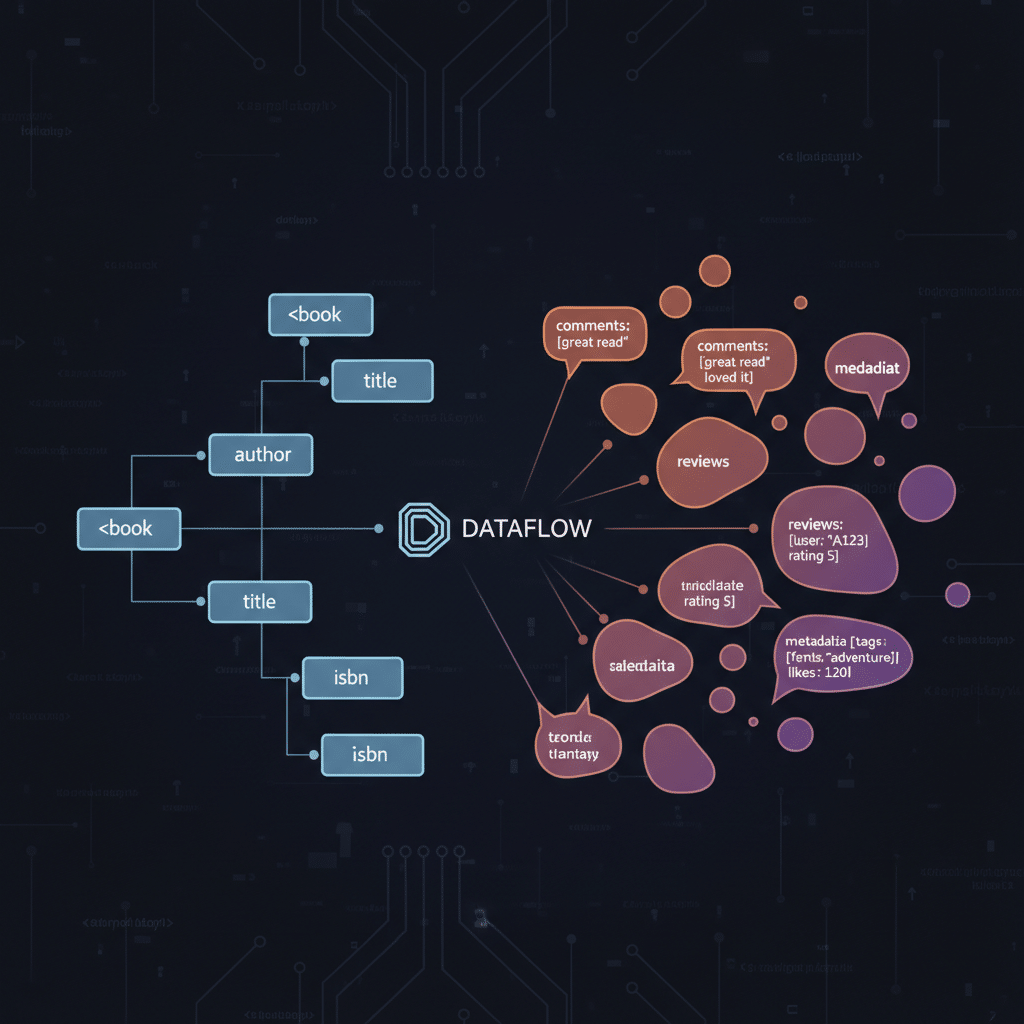
Hybrid formats with some organizational elements. XML files, email with metadata, and log files. Combines searchable fields with free-text content.
ESI Challenges for Legal Teams
Volume overwhelms traditional review methods. A single custodian may have hundreds of thousands of email items. Multiplied across dozens of custodians, the data becomes unmanageable without technology assistance.
Format diversity complicates processing. Microsoft Office documents, PDFs, CAD files, database exports, and proprietary formats all require different handling. Some formats contain embedded content that needs extraction.
Metadata preservation is critical but complex. File creation dates, modification timestamps, email headers, and system logs all provide crucial context. Improper collection methods can destroy this information permanently.
Complete Legal manages ESI complexity with proven workflows. We handle format conversion, metadata preservation, and quality control. Our processing ensures documents arrive organized and ready for review when your team needs them.
Effective Content Search and Collection Methods
Successful eDiscovery depends on effective search strategies. Legal teams must balance comprehensiveness with efficiency. Over-collection wastes review resources. Under-collection risks missing critical evidence.
Search Results Management
Content search generates results that require management. Statistics show hit counts by location. Preview functions display sample documents. Export options prepare materials for detailed review.
Search results can be refined iteratively. Teams review initial results to assess relevance. They adjust queries based on what they find. This iterative approach improves precision without requiring perfect initial searches.
Large result sets benefit from sampling. Reviewing a random sample helps estimate overall relevance rates. This information guides decisions about whether to broaden or narrow search criteria.
Organizing Documents with Review Sets and Case Management
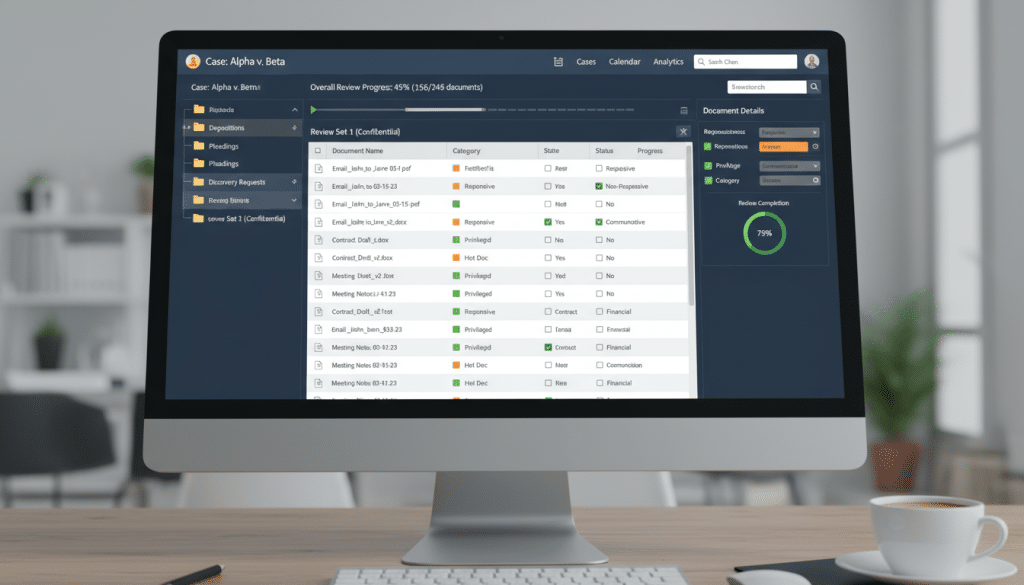
Effective document organization accelerates review and improves team collaboration. Review sets provide structure for managing large document collections. Case management tools coordinate work across multiple team members.
Creating and Managing Review Sets
Review sets gather related documents into manageable collections. Instead of working with raw search results, teams organize materials logically. Documents can belong to multiple review sets based on different issues or phases.
Within review sets, documents receive additional processing. Optical character recognition (OCR) extracts text from images. Conversation threading connects related email messages. Family grouping keeps attachments with parent documents.
Let Complete Legal Organize Your Discovery Materials
We prepare review-ready document sets with consistent formatting, complete metadata, and logical organization. Your team gets clean deliverables that are easy to work with under deadline pressure.
Case Management and Team Coordination
Complex cases involve multiple reviewers working simultaneously. Case management systems coordinate this distributed work. They track review progress, assign documents to specific team members, and maintain consistent tagging.
Role-based access controls limit who can view sensitive materials. Administrators manage case settings. Reviewers access documents assigned to them. Analysts run reports on review progress and document statistics.
Tagging and Coding Strategies
Document tags create structure within review sets. Tags indicate relevance, responsiveness, privilege, or specific issues. Consistent tagging enables filtering and reporting.
Objective tags capture factual information. Document dates, custodians, and file types represent objective tags. These often get applied during processing through metadata extraction.
Subjective tags reflect reviewer judgments. Relevance determinations, privilege assertions, and issue coding fall into this category. These require human review for accurate application.
Tag hierarchies organize related concepts. A privilege tag might include subtags for attorney-client privilege, work product, or other privilege types. This structure supports detailed reporting while maintaining high-level filtering capability.
Complete Legal’s Comprehensive eDiscovery Services
Complete Legal delivers eDiscovery support designed for legal teams under deadline pressure. We handle the technical complexity so you can focus on case strategy. Our services span from initial document capture through final production delivery.
Digital Copy and Scan Services
Paper documents still appear in many cases. Converting physical materials to digital format creates searchable, shareable files. Our scanning services handle documents of all sizes and formats.
Standard page scanning processes letter and legal size documents. High-speed equipment maintains quality while meeting tight deadlines. Output formats include PDF, TIFF, and multi-page files suitable for review platforms.
Oversize document scanning handles blueprints, maps, and engineering drawings. Wide-format scanners capture details from large-scale materials. Color scanning preserves important visual information from charts, photographs, and highlighted documents.
Digital file output meets specific production requirements. We format deliverables according to opposing counsel agreements or court orders. Files are organized logically with consistent naming conventions.
Standard Scanning
- Letter and legal size documents
- Single and double-sided capture
- Black and white or grayscale output
- PDF or TIFF format delivery
Oversize & Wide Format
- Blueprints and engineering drawings
- Maps and site plans
- Posters and presentation boards
- Preservation of scale and detail
Color Document Processing
- Photographs and images
- Highlighted or annotated documents
- Color-coded materials
- Charts and diagrams
OCR and Document Conversion
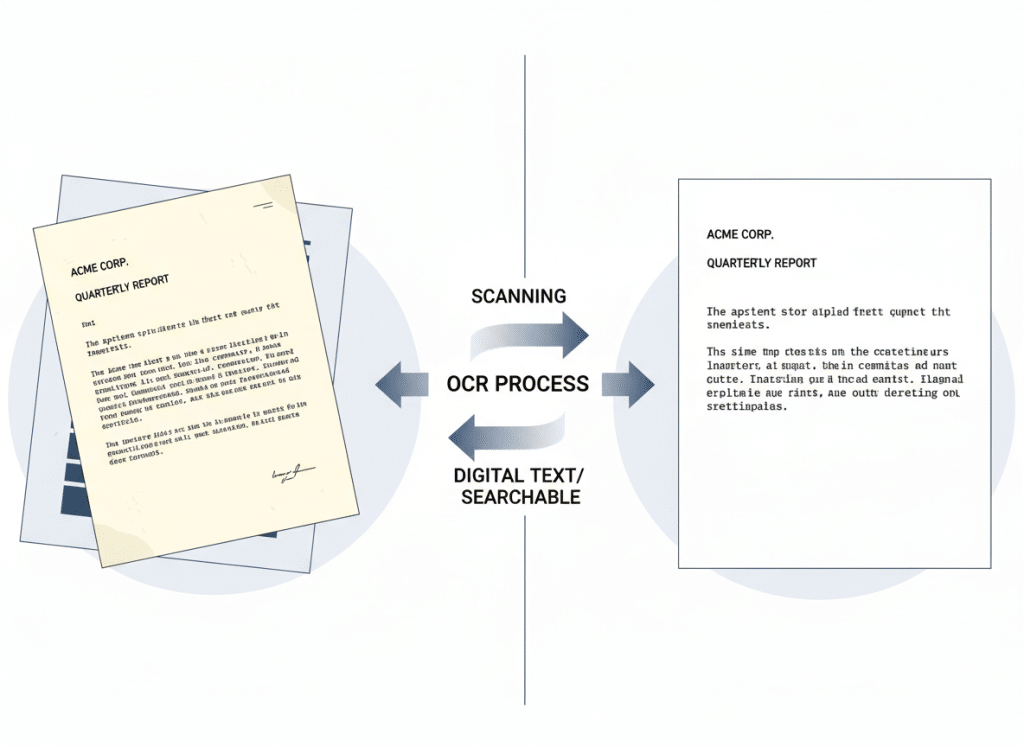
Optical character recognition transforms scanned images into searchable text. This process enables full-text search within documents. It also allows text extraction for analysis and reporting.
Our OCR processing handles various document conditions. Clean typed documents convert with high accuracy. Handwritten notes and poor-quality copies receive appropriate processing to maximize text recovery. We validate OCR output to ensure usability.
Format conversion adapts files to required specifications. Native files convert to image formats with extracted text. Unusual file types get transformed into standard formats that review platforms can handle. Metadata is preserved throughout conversion processes.
ESI and eDiscovery Support
Electronically stored information requires specialized handling. We assist with document preparation workflows that reduce manual effort for your team. Our ESI support includes data processing, format standardization, and quality control.
Document preparation starts with understanding production requirements. We clarify specifications before processing begins. This prevents rework and ensures deliverables meet expectations the first time.
Conversion workflows transform native files into production formats. We extract metadata and embed it in load files. Document families stay connected. Numbering schemes follow specified patterns.
Quality control verifies every deliverable. We check file counts against source materials. We validate metadata accuracy. We confirm that documents open properly and text searches work as expected.
Partner with Dallas-Fort Worth’s Trusted Litigation Support Team
Complete Legal keeps your eDiscovery workflow organized and on schedule. From the first request to final delivery, we provide clear communication and reliable execution. Texas legal teams depend on our deadline-driven approach and secure deliverables.
Compliance, Security, and Data Protection in eDiscovery
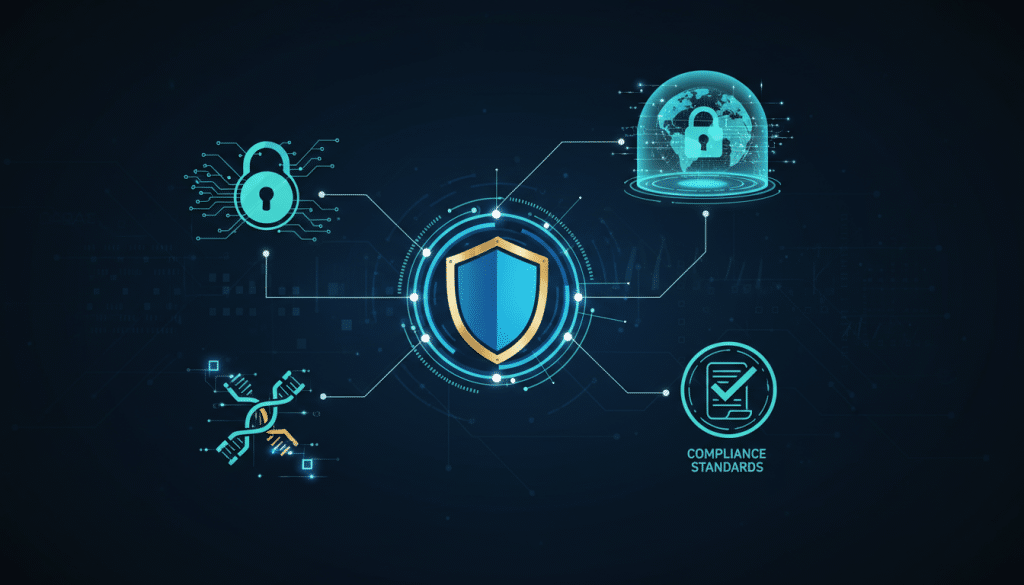
eDiscovery processes handle sensitive information. Proper security and compliance measures protect confidential materials. Understanding these protections helps legal teams maintain client trust and meet regulatory requirements.
Data Security During eDiscovery
Secure handling starts with collection. Forensically sound methods preserve data integrity. Chain of custody documentation tracks materials from original location through final production. Hash values verify that documents remain unchanged during processing.
Encryption protects data during transmission and storage. Files in transit use TLS encryption. Stored materials receive encryption at rest. Access controls limit who can view sensitive content.
Role-based access controls restrict eDiscovery functions to authorized users. Audit logging tracks all access and actions within eDiscovery cases. Multi-factor authentication adds extra protection for administrative accounts.

Compliance and Retention Management
Retention policies determine how long organizations keep data. Legal holds override standard retention rules to preserve materials during litigation. Once holds release, normal retention policies resume.
Compliance requirements vary by industry and jurisdiction. Healthcare organizations follow HIPAA regulations. Financial institutions comply with SEC and FINRA rules. Government contractors meet NIST standards. eDiscovery processes must respect these varying requirements.
Privilege and Confidentiality Protection
Privileged materials require special handling. Attorney-client communications and work product enjoy legal protections. These documents must be identified during review and withheld from production.
Privilege logs document withheld materials. They describe each privileged document without revealing protected content. Logs typically include dates, authors, recipients, and privilege basis. Creating comprehensive privilege logs requires careful review.
Redaction removes sensitive information from produced documents. Personal identifiers, trade secrets, and privileged passages get obscured. Redaction must be permanent to prevent recovery of removed content.
Security Best Practice: Complete Legal maintains strict confidentiality protocols throughout the eDiscovery process. We use secure file transfer methods, encrypt stored materials, and limit access to authorized personnel only. Your case materials receive the protection they deserve.
Why Texas Legal Teams Choose Complete Legal
Complete Legal earned recognition as Texas Best through consistent execution and client-focused service. We understand the pressure legal teams face when deadlines approach. Our approach prioritizes clear communication, reliable follow-through, and deliverables teams can depend on.
Serving Law Firms Across Dallas–Fort Worth and Texas
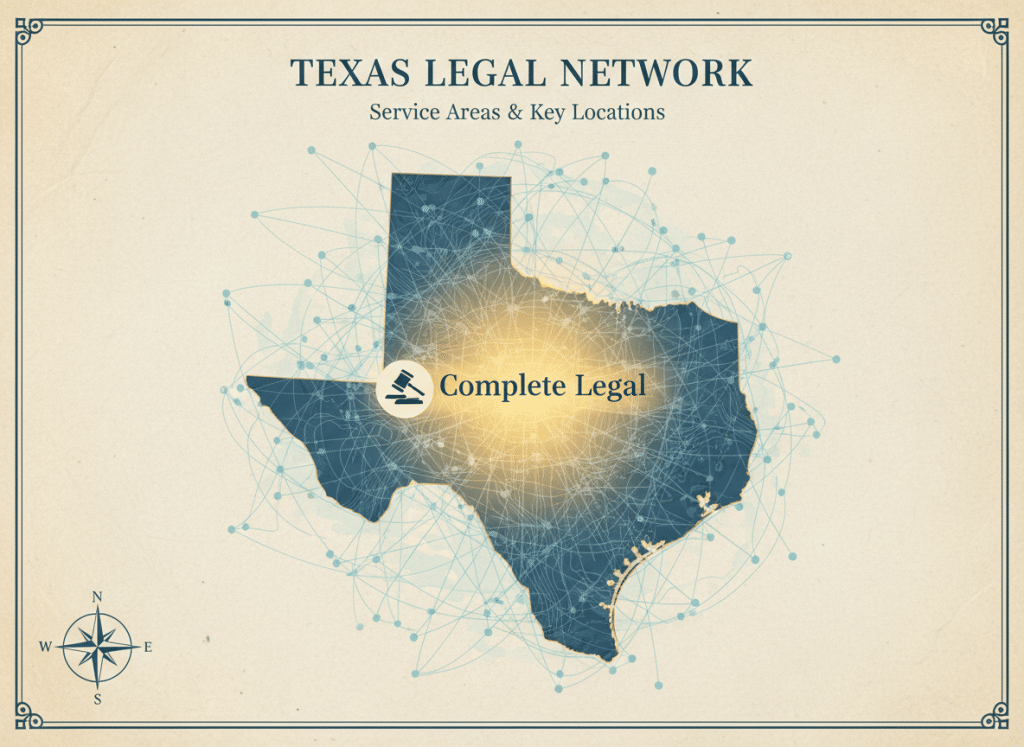
We work with law firms, paralegals, and litigation support teams throughout Texas. Our Dallas location at 1201 Elm Street provides convenient access for Dallas–Fort Worth clients. We also serve teams across the state who need reliable remote support.
Local presence matters during complex cases. Face-to-face coordination helps clarify requirements. Quick turnaround on rush requests becomes possible with nearby facilities. Dallas teams benefit from our proximity when emergencies arise.
Remote collaboration serves teams beyond the metroplex. Secure online access lets clients review deliverables from anywhere. Digital delivery eliminates shipping delays. Cloud-based coordination keeps everyone synchronized regardless of location.
Comprehensive Litigation Support Services
eDiscovery represents one component of comprehensive litigation support. Complete Legal offers related services that support the full case lifecycle. This integrated approach simplifies vendor management and ensures consistent quality.
Court reporting capture testimony accurately. Reporters deliver transcripts on tight schedules. Video depositions provide visual records for remote review and trial presentation.
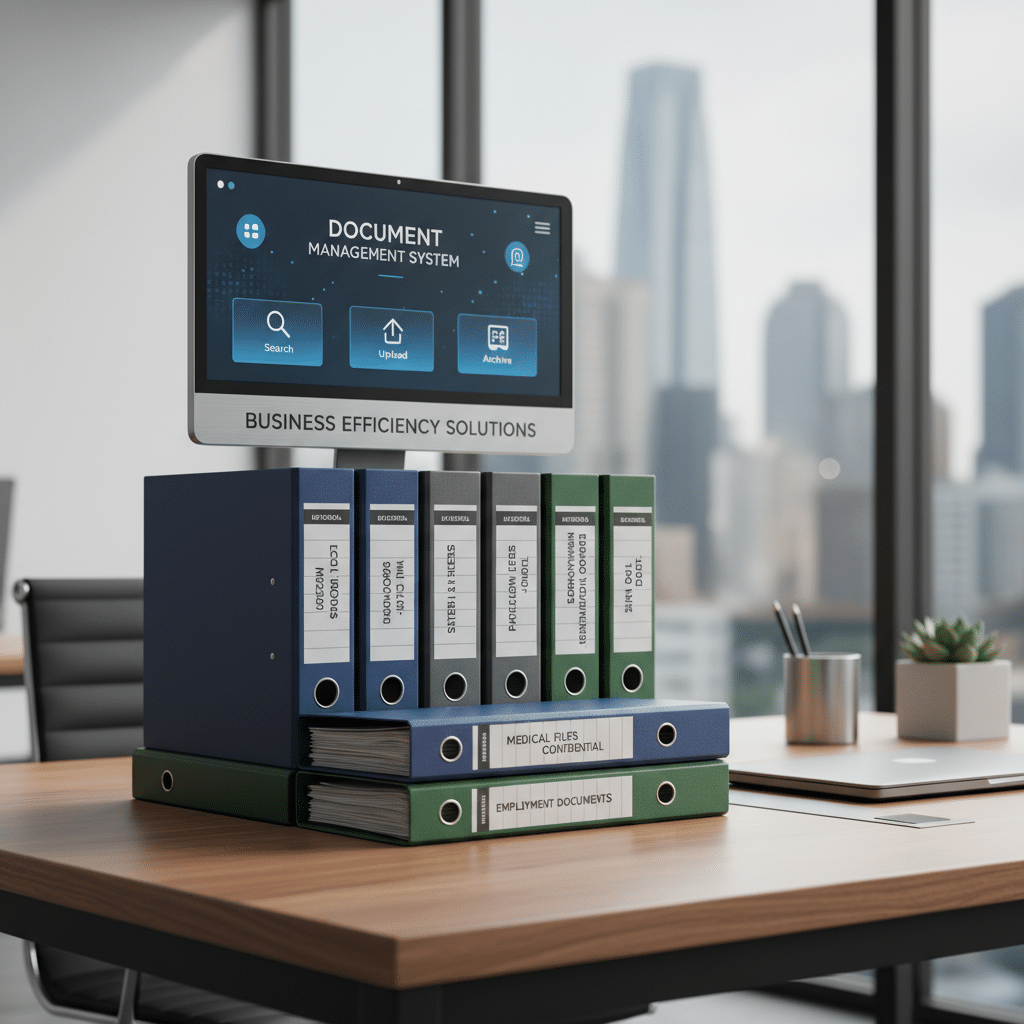
Record retrieval gathers medical records, employment files, and other third-party documents. We coordinate with record custodians to obtain materials efficiently. Subpoena services ensure proper legal process for obtaining evidence.
Mobile notary services bring authentication to your location. This saves time when documents require notarization during busy litigation phases. Our notaries understand legal document requirements and maintain proper protocols.

Court Reporting
Certified reporters deliver accurate transcripts when you need them. Video depositions capture testimony with professional quality for remote review and courtroom presentation.
Record Retrieval & Subpoenas
We coordinate with custodians to obtain medical records, employment files, and other third-party materials. Subpoena services ensure proper legal process and timely document delivery.

Mobile Notary & Document Services
Notarization comes to your location. We also provide exhibit boards, binding services, mail outs, and specialty printing to support trial preparation and case management needs.
Our Commitment to Clear Communication
Communication challenges create unnecessary stress during litigation. We eliminate confusion with straightforward updates and proactive coordination. You know what to expect and when to expect it.
Project coordination starts when you first reach out. We clarify requirements before work begins. Questions get answered promptly. Specifications are documented to prevent misunderstandings.
Progress updates keep you informed. You receive notifications when milestones complete. Potential delays trigger immediate communication so you can adjust plans. No surprises means no last-minute scrambling.
Delivery confirmation provides peace of mind. You receive notification when materials are ready. Access credentials arrive with clear instructions. Support remains available if questions arise during your team’s review process.
Ready to streamline your litigation support?
Selecting the Right eDiscovery Partner for Your Firm
Choosing an eDiscovery partner affects case outcomes. The right provider reduces stress and improves efficiency. Several factors deserve consideration when evaluating potential partners.
Technical Capability and Experience
Technical expertise separates reliable providers from those who create additional work. Partners should understand current eDiscovery technologies and legal requirements. They need experience handling various file formats and data sources.
Industry experience matters. Providers familiar with legal workflows understand unique requirements. They anticipate issues before they become problems. Their processes reflect lessons learned across numerous cases.
Responsiveness and Deadline Management
Litigation runs on tight schedules. Your eDiscovery partner must handle deadline pressure reliably. Late deliverables cascade into review delays and potential case complications.
Complete Legal built our reputation on deadline-driven execution. We understand that legal teams operate under time constraints. Our processes prioritize meeting committed delivery dates.
Rush capabilities provide backup when unexpected needs arise. Cases evolve. Discovery requests expand. Opposing counsel imposes shortened deadlines. Having a partner who can accelerate when necessary protects your case strategy.
Quality Control and Accuracy
Document processing errors waste review time and create risks. Missing pages, corrupted files, or inaccurate metadata undermine case preparation. Quality control processes catch problems before deliverables reach your team.
Multi-layer verification ensures completeness. Page counts match source materials. Metadata validates against known values. Random sampling confirms processing accuracy across the full document set.
Complete Legal maintains meticulous attention to detail throughout processing. Our quality checks prevent the surprises that disrupt review schedules and force costly rework.
Pro Tip: When evaluating eDiscovery providers, ask for specific examples of how they’ve handled similar cases. Request references from legal teams in your practice area. Understanding their real-world performance provides better insight than marketing materials alone.
Security and Confidentiality Standards
Case materials contain confidential information. Your eDiscovery partner must maintain strict security protocols. Data breaches create ethical complications and potential malpractice exposure.
Verify security measures before engagement. How are files transmitted? Where are materials stored during processing? Who has access to your documents? What backup and disaster recovery procedures exist?
Complete Legal uses secure file transfer protocols for all client communications. Materials are stored in access-controlled facilities. Our staff receives regular confidentiality training. We treat your case materials with the protection they deserve.
Cost Transparency and Value
eDiscovery costs vary significantly between providers. Understanding pricing structures helps budget accurately. Transparent pricing prevents surprise charges that strain client relationships.
Volume-based pricing rewards efficiency. Per-page scanning rates drop as volume increases. Processing charges often tier based on data size. Understanding these structures helps predict costs for different case scenarios.
Value extends beyond price. Reliable execution prevents expensive delays. Accurate processing eliminates rework costs. Clear communication reduces time spent managing vendors. These factors contribute to overall value beyond line-item pricing.
Streamline Your Next eDiscovery Project
Complete Legal brings project management discipline to every engagement. We coordinate timelines, communicate proactively, and deliver when promised. Let us handle the complexity so your team can focus on winning cases.
The Future of eDiscovery Technology and Practice

eDiscovery continues evolving as technology advances and data volumes grow. Understanding emerging trends helps legal teams prepare for future challenges and opportunities.
Artificial Intelligence and Machine Learning
AI capabilities expand beyond basic predictive coding. Advanced systems now identify concepts, extract entities, and recognize complex patterns across documents. These tools accelerate review dramatically.
Natural language processing improves search accuracy. Systems understand context and meaning rather than just keyword matching. This reduces false positives and helps identify relevant content missed by traditional searches.
Automated summarization generates quick overviews of lengthy documents. Reviewers can assess relevance faster when AI provides concise summaries highlighting key information.
Continuous learning improves AI accuracy over time. As reviewers make decisions, systems refine their predictions. This feedback loop accelerates review as projects progress.

Cloud-Based eDiscovery Platforms
Cloud computing transforms eDiscovery infrastructure. Teams no longer need local processing capacity or storage. Cloud platforms scale to handle any data volume instantly.
Collaboration improves when teams work in cloud environments. Multiple reviewers access materials simultaneously from any location. This flexibility accelerates projects and supports distributed teams.
Security improves with enterprise cloud platforms. Major providers invest heavily in security infrastructure. Multi-factor authentication, encryption, and audit logging exceed what most organizations can implement independently.
Privacy Regulations and Cross-Border Discovery
Global privacy regulations complicate international discovery. GDPR in Europe, LGPD in Brazil, and similar laws worldwide restrict data transfers. Legal teams must navigate these requirements carefully.
Data localization requirements may prevent moving information across borders. Understanding where data resides and applicable regulations prevents inadvertent violations.
Privacy impact assessments become standard practice for cases involving personal information. These assessments identify risks and guide appropriate safeguards.
Anonymization and pseudonymization techniques allow analysis while protecting individual privacy. These approaches balance discovery needs against privacy obligations.
Proactive Information Governance
Forward-thinking organizations implement information governance programs. These programs manage data throughout its lifecycle. Better governance reduces eDiscovery costs and risks.
Retention policies limit how long organizations keep data. Disposing of unnecessary information reduces the volume subject to discovery. This lowers processing and review costs when litigation arises.
Classification systems organize information by sensitivity and importance. Legal holds can target specific classifications rather than preserving everything indiscriminately.
Defensible deletion programs eliminate data that has exceeded retention periods. Courts accept that organizations need not preserve everything indefinitely. Proper policies and documentation support defensible deletion practices.
Moving Forward with Confident eDiscovery Management
eDiscovery complexity continues increasing as data volumes grow and technology evolves. However, the fundamentals remain consistent. Clear planning, reliable execution, and attention to detail produce successful outcomes.
Legal teams need partners who understand both technical requirements and litigation realities. Complete Legal brings this dual expertise to every engagement. We handle document processing, format conversion, and quality control so your team can focus on case strategy.
Our Dallas location serves law firms, paralegals, and litigation support teams across Texas. We deliver the clear communication and deadline-driven execution that busy legal professionals require. From initial request to final delivery, we keep your workflow organized and on schedule.
The Texas Best recognition reflects our commitment to reliable standards. We earned this through consistent performance and client-focused service. Every project receives the meticulous attention that complex litigation demands.
Whether you need comprehensive eDiscovery support or specific services like scanning, OCR, or ESI preparation, Complete Legal provides the capabilities you need. Our integrated approach to litigation support simplifies vendor management while ensuring consistent quality across all deliverables.
Start Your Next eDiscovery Project with Complete Legal
Experience the difference that reliable execution and proactive communication make. Contact Complete Legal today to discuss your eDiscovery needs. We deliver organized, review-ready materials when you need them—no surprises, no last-minute scrambling.
Complete Legal
1201 Elm Street, Suite 2560
Dallas, Texas 75270
Our comprehensive litigation support services extend beyond eDiscovery. Court reporting, record retrieval, subpoena services, deposition by written questions support, audio/video services, and mobile notary support are all available from a single trusted provider. This integration streamlines your case management and ensures consistent quality across all support functions.
Complete Legal understands deadline pressure. We built our processes around the reality that legal teams operate under time constraints. When you call, you reach professionals who understand litigation workflows and respond accordingly.
Secure online access provides convenient deliverable review from any location. Your team can examine processed documents, verify completeness, and begin review work immediately upon delivery notification. We eliminate unnecessary delays that compromise case timelines.
Partner with the eDiscovery provider Texas legal teams trust for reliability, accuracy, and deadline-driven performance. Contact Complete Legal to discuss your next project.
Call now to discuss your eDiscovery needs: